
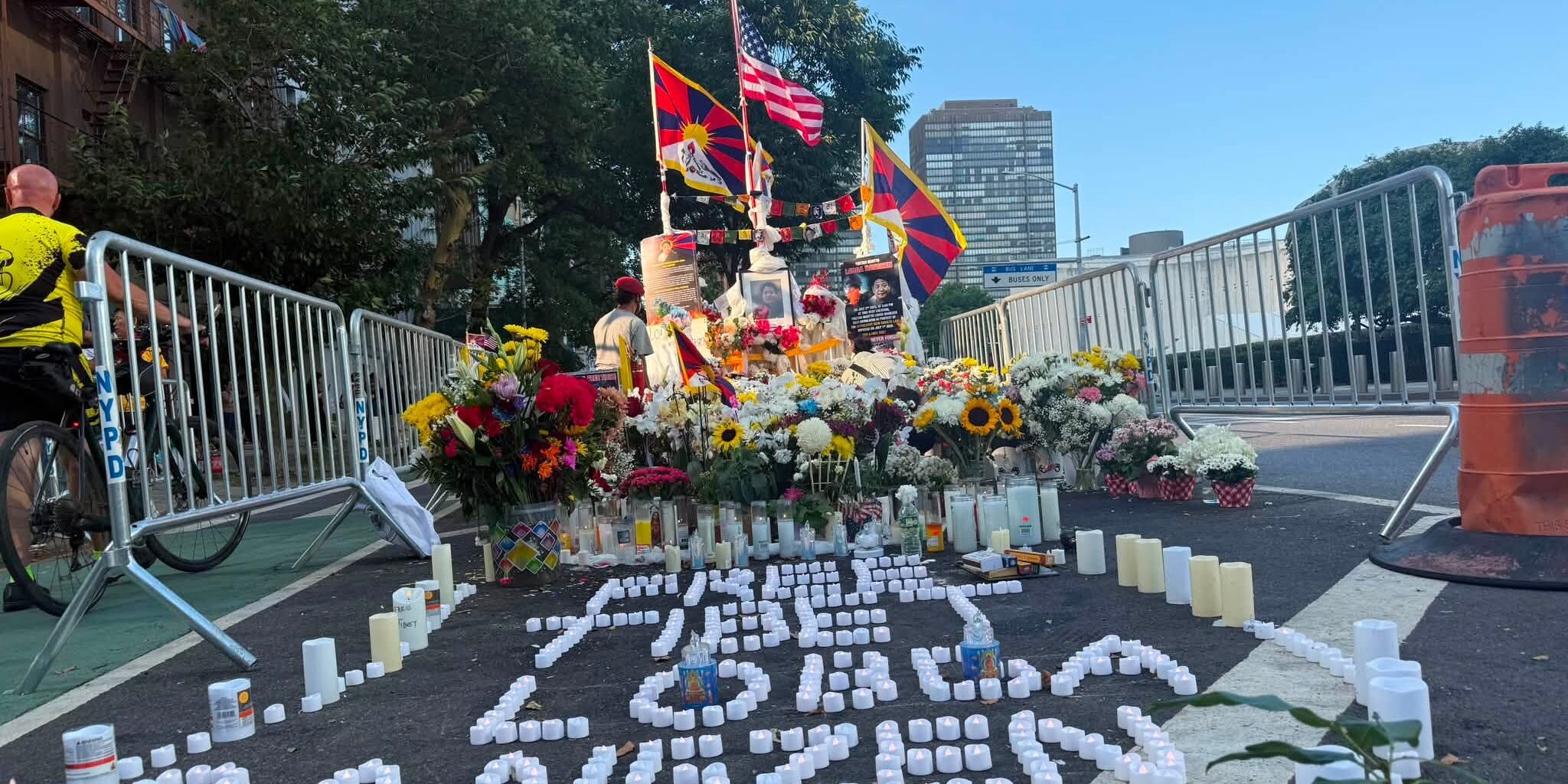
The United States has reaffirmed its longstanding support for the fundamental rights and aspirations of the Tibetan people, renewing its call for China to resume direct dialogue with the Dalai Lama and democratically elected Tibetan leaders amid mounting concern over the deteriorating human rights situation in Tibet.
The statement followed the death of Tibetan activist Lobga Rangzen, who suffered severe burns after setting himself on fire near the United Nations headquarters in New York on July 2. Tibetan activists and media organizations said Rangzen made a live appeal for Tibetan independence and unity shortly before his self-immolation.
“The United States is committed to supporting the unalienable human rights and aspirations of Tibetans to celebrate and preserve their unique culture, language, and religion without fear of interference,” a State Department spokesperson said.
“The United States will continue to call on China to return to direct dialogue, without pre-conditions, with the Dalai Lama and his representatives, and with the democratically elected Tibetan leaders, to resolve differences and achieve meaningful autonomy for Tibetans,” the spokesperson added.
The latest statement continues a position maintained by successive Republican and Democratic administrations: that Tibetans must be allowed to preserve their language, religion and cultural identity, and that the unresolved Tibetan issue should be addressed through substantive negotiations rather than repression.
Washington has also consistently opposed Chinese government interference in the selection of Tibetan Buddhist leaders, including the eventual succession of the Dalai Lama. In July 2025, the State Department reiterated that China should cease interfering in the succession of the Dalai Lama and other Tibetan Buddhist lamas and respect religious freedom.
Decades of Bipartisan US Support
American support for Tibet has developed over decades through diplomacy, legislation and human rights policy.
The Tibetan Policy Act of 2002 established the promotion of dialogue between Beijing and representatives of the Dalai Lama as an explicit objective of U.S. policy. It also recognized the importance of preserving Tibet’s religious, cultural and linguistic heritage.
The Reciprocal Access to Tibet Act, signed into law in 2018, authorized restrictions against Chinese officials responsible for denying American diplomats, journalists and citizens access to Tibetan areas.
The Tibetan Policy and Support Act of 2020 strengthened U.S. opposition to Chinese government interference in Tibetan Buddhist reincarnation and succession practices. It declared that decisions concerning the succession of the Dalai Lama belong exclusively to the Tibetan Buddhist community.
In 2024, the Resolve Tibet Act further reinforced the American position that the dispute over Tibet’s status remains unresolved and should be settled through dialogue consistent with international law and without preconditions.
Together, these measures demonstrate that support for Tibet is not confined to a single administration or political party. It has become one of the most consistent elements of U.S. human rights policy toward China.
The State Department’s latest statement therefore represents more than an isolated expression of sympathy following a tragic death. It reaffirms a durable policy that recognizes both the Tibetan people’s fundamental rights and the need for a negotiated resolution to the Tibet-China conflict.
Rangzen’s Death Draws Attention to an Unresolved Crisis
Rangzen’s self-immolation outside the United Nations has once again drawn international attention to the depth of despair surrounding the Tibetan struggle.
The International Campaign for Tibet has recorded 159 self-immolations by Tibetans inside Tibet since 2009, along with 11 cases in exile. Many of those who carried out such acts called for freedom in Tibet and the return of the Dalai Lama.
These acts should not be viewed in isolation from the conditions inside Tibet. Tibetans face severe restrictions on peaceful expression, religious practice, education, movement and access to information. Even nonviolent expressions of Tibetan identity or devotion to the Dalai Lama can expose individuals to detention, political re-education or other punishment.
Freedom House gave Tibet a score of zero out of 100 in its 2026 assessment of political rights and civil liberties, again ranking it among the least free territories in the world. The organization said Chinese authorities rigorously suppress dissent and manifestations of Tibetan religious and cultural identity.
The U.S. State Department has likewise documented arbitrary detention, torture, political indoctrination, restrictions on religious freedom and extensive surveillance in Tibetan areas. Its reporting describes a system in which Tibetan religious institutions, schools, communications and public life remain subject to tight Communist Party control.
Lobga Rangzen’s death cannot by itself explain the full complexity of the Tibetan struggle. It nevertheless reflects the continued failure of the international community to secure meaningful change after decades of repression and more than 15 years without formal Sino-Tibetan dialogue.
The last publicly acknowledged round of talks between representatives of the Dalai Lama and the Chinese government took place in 2010.
Language, Religion and Children Under Pressure
The human rights crisis in Tibet increasingly extends beyond the imprisonment of activists or the suppression of public protests. It now reaches deeply into education, family life, language transmission and religious identity.
United Nations experts have expressed alarm over the placement of approximately one million Tibetan children in state-run residential schools. The experts warned in 2023 that children were being separated from their families and immersed in a Mandarin-dominated curriculum that provided little meaningful instruction in Tibetan history, religion and culture. They said the system appeared to function as a large-scale program of assimilation.
Tibetan-language schools and privately organized educational programs have faced growing restrictions, while Mandarin has increasingly become the principal language of formal instruction. Religious education for children has also been curtailed, and monasteries are required to prioritize political loyalty to the Chinese Communist Party.
The Chinese government continues to assert authority over the recognition of reincarnated Tibetan Buddhist leaders. Beijing maintains that it must approve the successor of the Dalai Lama, despite the Chinese Communist Party being an officially atheist political organization.
The Dalai Lama has rejected that claim and instructed Tibetans not to recognize any candidate selected for political purposes by Beijing.
The conflict over succession is not simply about the identity of one religious leader. It concerns whether Tibetan Buddhism will continue as a living religious tradition guided by Tibetans or be transformed into an institution controlled by the Chinese state.
New Law Deepens Assimilation Fears
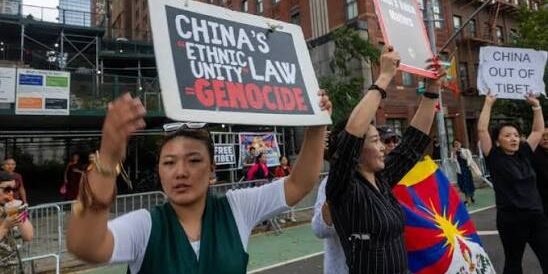
Concern over Tibet intensified further after China’s Law on Promoting Ethnic Unity and Progress took effect on July 1, one day before Rangzen’s self-immolation.
Chinese authorities describe the legislation as a measure promoting national unity and equality among ethnic groups. Human rights organizations, Tibetan representatives and international observers, however, say it codifies policies intended to assimilate Tibetans and other non-Han communities into a state-defined Chinese national identity.
The law makes the strengthening of a unified “Chinese national community” a central responsibility of government institutions, schools, families and citizens. It requires the promotion of standard spoken and written Chinese and gives Mandarin priority even in areas where minority languages have historically been used.
The International Campaign for Tibet argues that these provisions undermine linguistic and cultural protections contained in China’s Constitution and its Law on Regional Ethnic Autonomy. It describes the legislation as the culmination of a decades-long effort to weaken Tibet’s distinct identity and replace meaningful autonomy with compulsory integration.
The legislation also requires parents and guardians to educate children to love the Communist Party, the Chinese state and the Chinese nation, while prohibiting the transmission of ideas authorities consider harmful to ethnic unity.
Its extraterritorial provisions have caused additional alarm. Article 63 states that organizations and individuals outside China may be held legally responsible for activities Beijing considers harmful to national unity. Rights advocates fear the provision could be used against Tibetans and their supporters living abroad, expanding China’s already extensive system of transnational repression.
Eight United Nations human rights experts raised concerns that the law could further restrict cultural, linguistic, educational, religious and family rights. They warned that it risked entrenching forced assimilation in violation of China’s international human rights obligations.
Amnesty International similarly warned before the law took effect that it could intensify assimilation by subordinating minority languages, religions and identities to an officially defined national culture.
Estonia Lawmakers Add Their Voice
The State Department statement coincided with growing criticism of China’s Tibet policies in Europe.
On July 6, 51 members of Estonia’s 101-member parliament signed a statement condemning the Ethnic Unity and Progress Law and calling for its immediate repeal.
The lawmakers described Tibet as an illegally occupied country and argued that the legislation creates a legal structure for suppressing Tibetan language, religion and identity. They also urged governments and United Nations bodies to respond collectively to China’s assimilation policies and to support Tibetan cultural preservation.
China reacted angrily, accusing the Estonian lawmakers of supporting Tibetan independence and interfering in its internal affairs.
Chinese Foreign Ministry spokesperson Mao Ning issued a similar response to the latest American statement, urging the United States to recognize Tibet as part of China, reject Tibetan independence and stop using Tibetan issues to interfere in Chinese affairs.
Beijing maintains that its policies have brought stability, economic development and cultural protection to Tibetan regions. It rejects international reports of forced assimilation and systematic human rights violations.
Those claims stand in sharp contrast to assessments by governments, United Nations experts and independent human rights organizations, which describe an increasingly restrictive system designed to control Tibetan religious, educational and cultural life.
From Statements to Sustained Action
The latest U.S. statement matters because it demonstrates that Tibet has not disappeared entirely from the international diplomatic agenda.
At a time when China is attempting to portray the Tibet issue as settled, Washington has again affirmed that meaningful autonomy, religious freedom and the preservation of Tibetan identity remain legitimate international concerns.
American support has been particularly important because it has survived changes in administrations and political leadership. Republican and Democratic lawmakers have repeatedly worked together on Tibet-related legislation, while successive administrations have continued to call for dialogue with the Dalai Lama and Tibetan representatives.
Yet the absence of negotiations since 2010 and the worsening conditions inside Tibet also expose the limitations of statements that are not accompanied by sustained diplomatic pressure.
China’s new ethnic unity law, the residential-school system, restrictions on the Tibetan language, political control of monasteries and the threatened interference in the Dalai Lama’s succession point to a broader project: the gradual transformation of Tibetans from a people with a distinct history and identity into a politically compliant population defined primarily by loyalty to the Chinese Communist Party.
The United States has consistently rejected that vision by maintaining that Tibetans possess fundamental rights that cannot legitimately be erased through state policy.
Rangzen’s death outside the United Nations has now placed the urgency of that commitment before the world once again.
The question is no longer whether the international community understands the severity of the situation in Tibet. The evidence has been documented repeatedly.
The question is whether the United States and other democratic governments will translate their longstanding support into coordinated and sustained action capable of protecting Tibet’s language, religion and cultural survival—and of bringing China back to the negotiating table.




Leave a Reply