
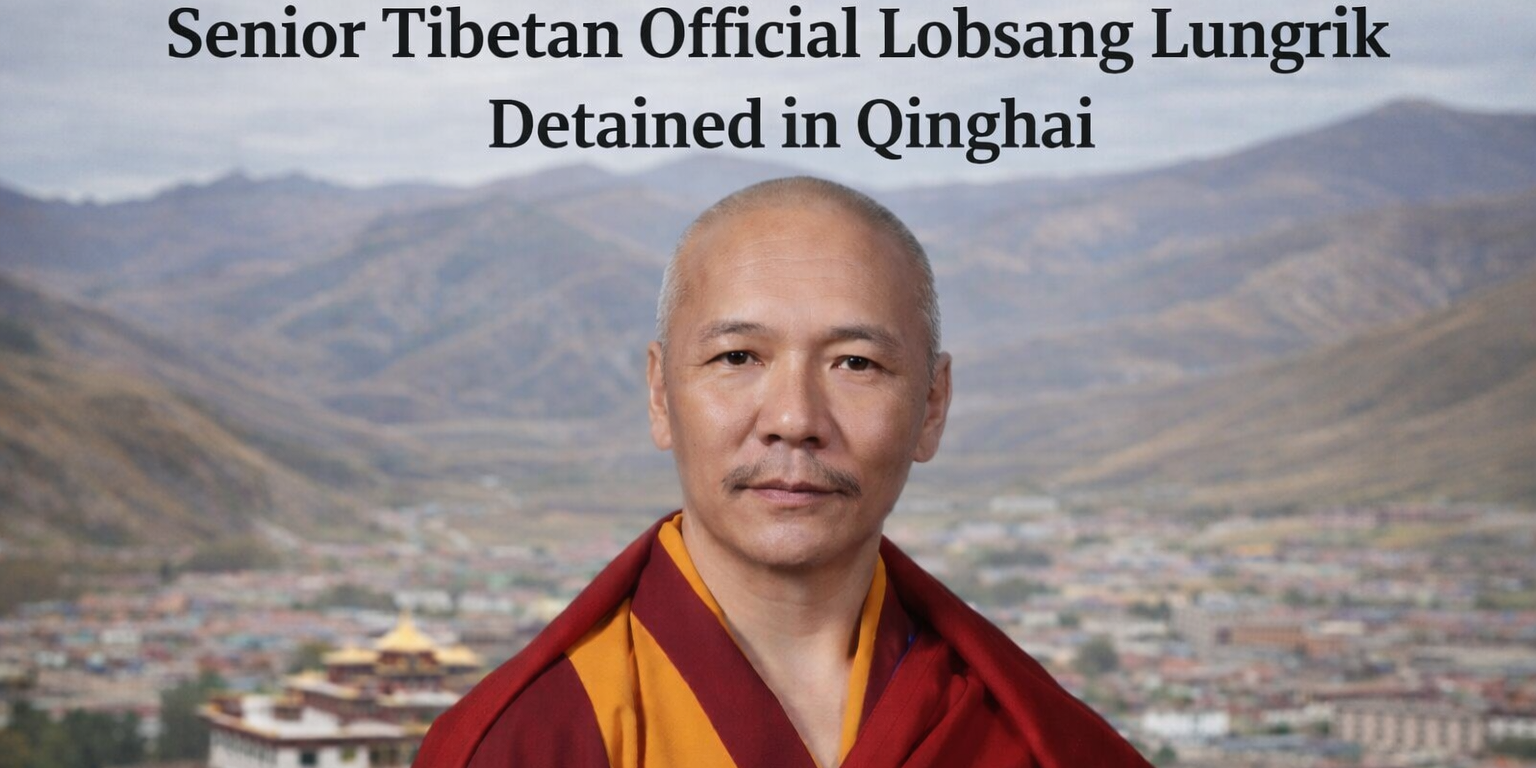
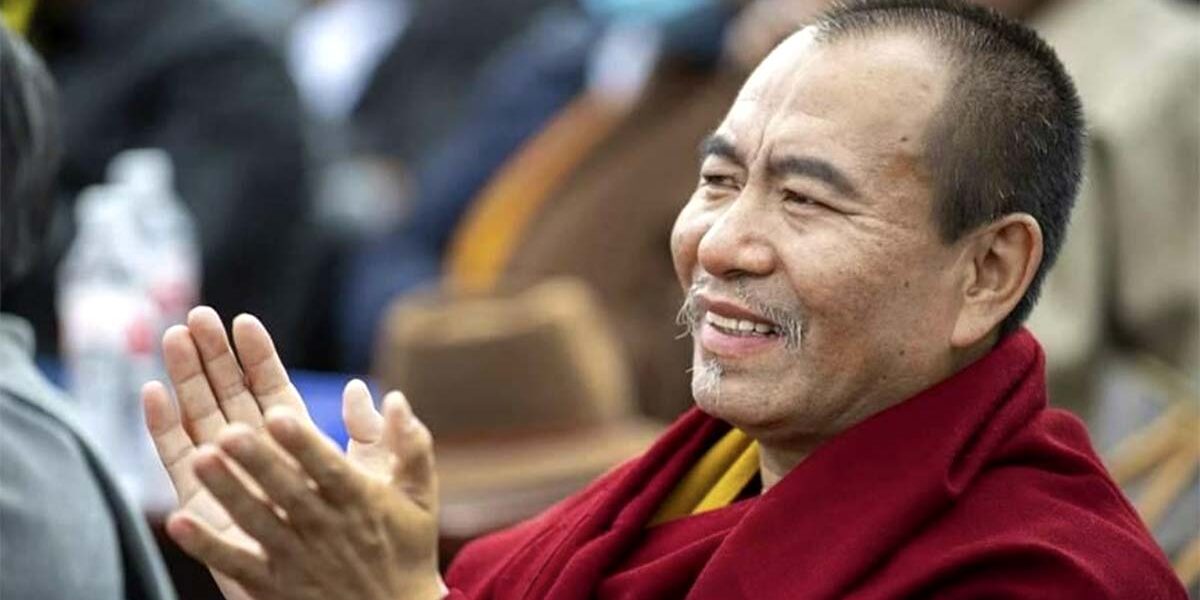
Chinese authorities have reportedly detained Lobsang Lungrik, a senior Tibetan official and monastic leader in Qinghai province, with his whereabouts remaining unknown since December 2024.
Lobsang Lungrik, 51, is the head lama of Ba Gön Monastery in Chumarleb (Chinese: Qumalai) County, Yushu Tibetan Autonomous Prefecture, Qinghai Province, in the Tibetan province of Kham. His detention was reported by the Tibetan Centre for Human Rights and Democracy (TCHRD), which cited sources familiar with the situation.
Removal from Provincial Political Body
On 26 December 2024, Qinghai Daily announced that “Luosong Longri” (罗松龙日), the Chinese name used for Lobsang Lungrik, had been removed from his position as a Standing Committee Member of the Qinghai Provincial Committee of the Chinese People’s Political Consultative Conference (CPPCC). His membership qualifications were revoked during the 11th meeting of the Standing Committee of the 13th Qinghai Provincial CPPCC.
The announcement named two other officials — Ma Fengsheng and Zhao Xuezhang — and publicly cited disciplinary violations in their cases. However, no specific offence was disclosed in relation to Lobsang Lungrik. The absence of publicly stated charges has raised concerns that his removal and subsequent detention may be political in nature.
Chinese authorities have not confirmed his current location, the legal grounds for his detention, or whether he has access to legal counsel.
Allegations and Background
According to TCHRD, the detention may be linked to allegations that Lobsang Lungrik assisted a Geshe (senior Buddhist scholar) who had returned from India and was residing at Ba Gön Monastery as a scripture teacher.
The Geshe, originally from the Tsawa area of Chamdo, had reportedly left his home monastery and later relocated to Chumarleb after authorities issued an arrest warrant for him. Sources indicated that the Geshe later died of natural causes at Ba Gön Monastery, though the exact date of his death remains unclear.
Authorities have reportedly accused Lobsang Lungrik of providing assistance to the Geshe and of sending funds abroad, allegedly to India — accusations frequently used in cases involving Tibetans with overseas connections.
A Senior State-Recognised Figure
Prior to his detention, Lobsang Lungrik held multiple state-recognised positions, including Vice President of the Buddhist Association of Qinghai Province, Executive Vice President of the Buddhist Association of Yushu Prefecture, and Vice Chairman of the Yushu Prefectural CPPCC. He was appointed a board member of the Yushu Buddhist Association in 1999.
Born on 25 August 1975 in Chumarleb County, he was recognised in 1982 as the 11th incarnation of Bartri Gyuchen. He studied for over two decades at Sera Monastery in Lhasa and later held advisory and academic positions, including at the China Tibetology Research Center. He earned a Master’s degree from Qinghai Normal University in 2015.
Broader Concerns Over Cross-Border Ties
Observers note that the case reflects the increasing scrutiny surrounding Tibetans who maintain cross-border personal, educational, or institutional ties. Allegations of contact with individuals who have resided abroad, or of sending funds overseas, have frequently led to investigations and detentions in recent years.
The case also highlights the potential risks not only for individuals who return to Tibet after living abroad, but for monasteries, families, and community members who host or assist them. In environments where overseas connections are closely monitored, associations alone may expose multiple people to legal or political consequences.
That a senior official holding several state-recognised positions could be detained without publicly disclosed charges underscores the uncertain position faced by Tibetan leaders navigating both official institutions and local community responsibilities.
Concerns of Arbitrary Detention
With no public clarification from authorities, Lobsang Lungrik’s incommunicado detention raises serious concerns of arbitrary detention and enforced disappearance.
Enforced disappearance violates fundamental human rights, including the rights to liberty and security of person, protection from torture or cruel treatment, and the right to a fair trial.
As of publication, no official statement has clarified his status or provided assurances regarding his wellbeing.



Leave a Reply