
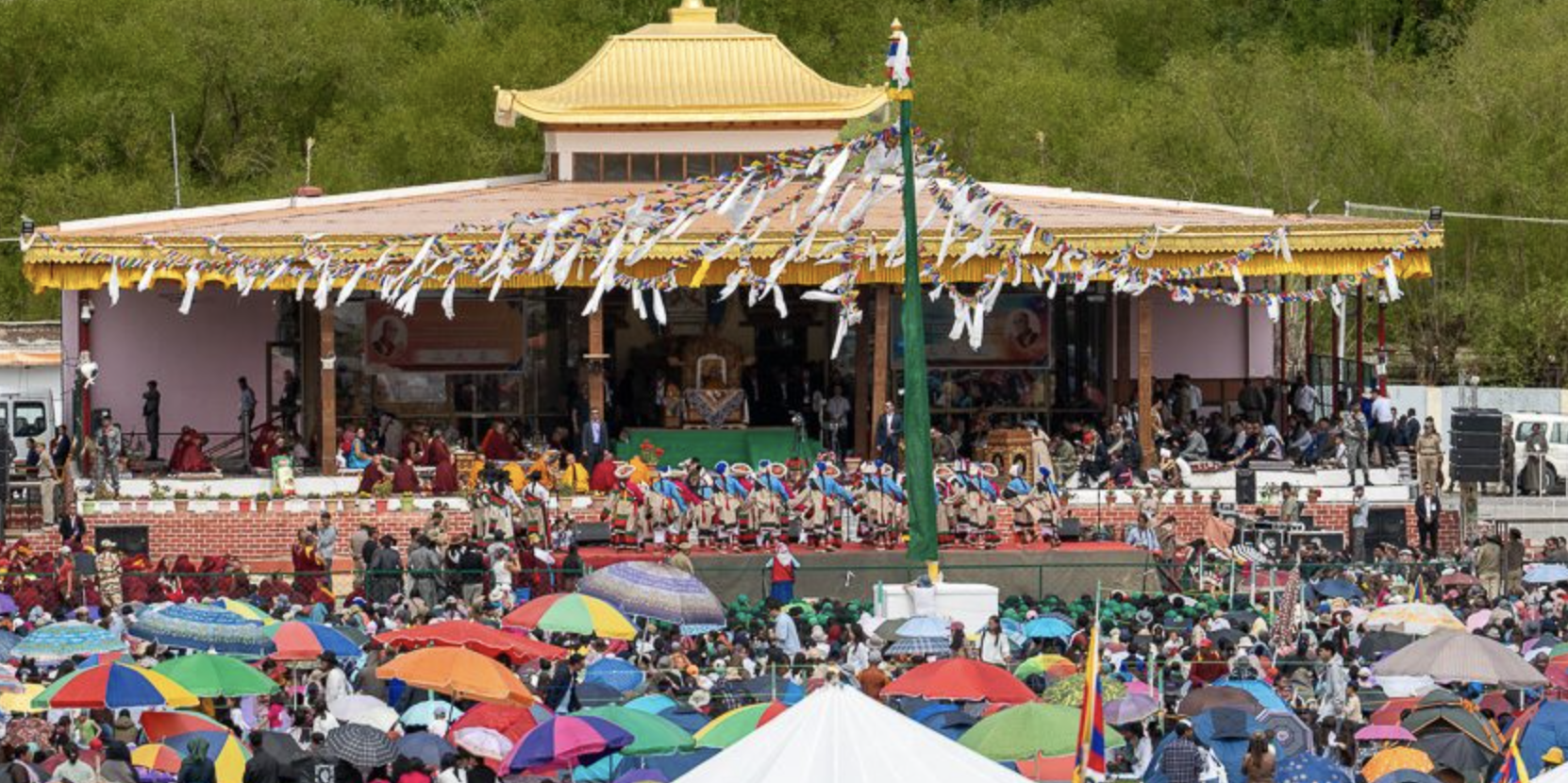
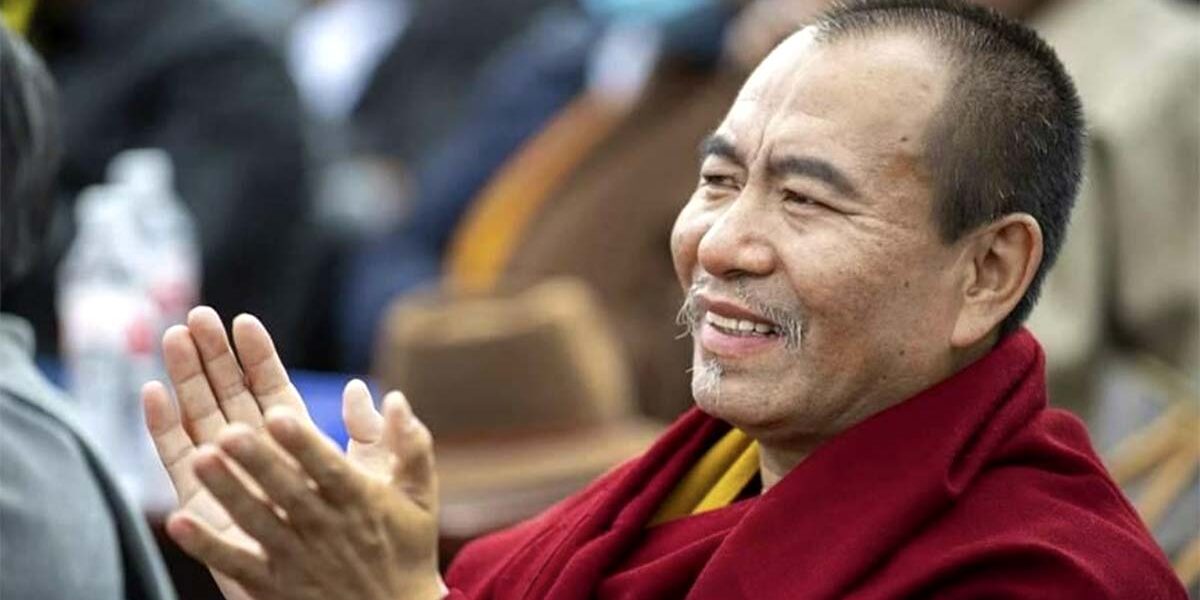
On July 6, 2026, an old man in maroon robes sat before long-life prayers and khata scarves in Leh, India, marking 91 years on this earth. He has no army, no seat at the United Nations, no territory he governs. And yet few living figures command the moral gravity of Tenzin Gyatso, the 14th Dalai Lama. That a stateless monk can still summon presidents, parliaments, and prime ministers to attention is itself a kind of verdict on power, a proof that conscience, patiently held, can outlast the machinery built to crush it.
But birthdays for the Dalai Lama have stopped being simple celebrations. Each one now arrives freighted with a countdown. This is not sentimentality; it is arithmetic. And in that arithmetic lies the most dangerous question in Asia: who decides what comes after him.
A Year That Sharpened Everything
The last twelve months did not allow for comfortable abstraction. In July 2025 the Dalai Lama ended decades of ambiguity, declaring that the institution of the Dalai Lama will continue after his death and that only his own Gaden Phodrang Trust holds the authority to recognize his reincarnation, a deliberate act of exclusion aimed at Beijing. China’s response came within hours: the reincarnation, its foreign ministry insisted, must follow “historical conventions” and receive the approval of the central government, invoking a Qing-dynasty lottery ritual, the drawing of lots from a golden urn, it has since written into law. Two systems of legitimacy, one spiritual and one bureaucratic, are now on a collision course that a growing number of observers believe will end in the appearance of two Dalai Lamas: one recognized by Tibetans and the free world, one anointed by a state that has already shown, through its handling of the vanished Panchen Lama in the 1990s, exactly what “recognition” means when Beijing performs it.
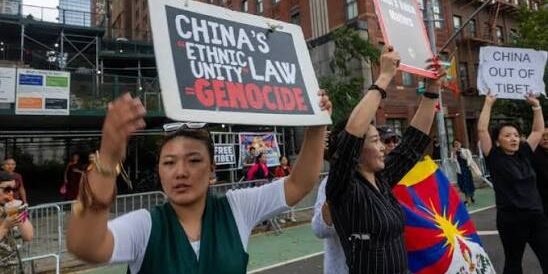
Then came July 1, 2026: the day China’s new Law on Promoting Ethnic Unity and Progress took effect, formalizing policies of cultural and linguistic assimilation that Tibetans, along with rights groups, had warned about for years. The very next day, a Tibetan man living in exile in New York, Lobsang Palden, planted a Tibetan flag outside UN headquarters and set himself on fire, dying in protest of what he called Beijing’s campaign to erase Tibet as a people. His act did not trend for long in a world glutted with catastrophe. But it should not be allowed to pass unremembered. When a human being chooses fire over silence, it is because every other form of speech has already been taken from him.
Around the same birthday, Nepal’s government, leaning on its “One-China” posture, banned public gatherings and “Free Tibet” demonstrations in Kathmandu, a small but telling sign of how far Beijing’s veto now reaches beyond its own borders. Meanwhile in Brussels, a Belgian minister stood before parliament and said plainly that the Dalai Lama’s succession “is a matter for the Tibetan community itself, without interference from secular authorities.” In the U.S., Congressman Michael McCaul marked the birthday by naming, without euphemism, the persecution Tibetans have endured. The U.S. State Department backed Tibetans’ efforts to preserve their culture and urged China to resume talks with the Dalai Lama after a Tibetan man’s self-immolation near the U.N. headquarters. These gestures matter. They are also, measured against the scale of what is unfolding on the Tibetan plateau, still just words.
Territory, Water, and the Weaponization of Faith
Strip away the theology and the Tibet question is also unmistakably strategic. The plateau borders India and sits at the centre of the most militarized rivalry in Asia. It is the source of the rivers that feed hundreds of millions of people downstream, a hydrological throne room disguised as a monastery. Whoever administers Tibet administers water, altitude, and the buffer zone between two nuclear powers. This is why Beijing’s investment in the region is not merely developmental; it is civilizational insurance for the Chinese state.
And now religion itself has become a battlefield of influence. India is spending millions repatriating Buddhist relics, building international Buddhist centres in Lumbini, and quietly positioning itself as the custodian of a faith it does not practice at scale but desperately wants to claim diplomatically. China is doing the same, pouring capital into Buddhist infrastructure across Nepal, Thailand, Vietnam, and Mongolia. Two officially secular, nuclear-armed governments are now competing for the soul of a religion whose founder walked away from a palace. There is a bitter irony here that should not be lost on anyone: the very impermanence and non-attachment Buddhism teaches is being converted into a permanent asset in a geopolitical ledger.
The Democratic World’s Alibi
This is where the free world’s comfortable rhetoric meets its uncomfortable balance sheet. It is easy for a foreign ministry to issue a statement affirming that reincarnation is a matter of faith, not politics. It is much harder to place a single dollar of trade, a single supply chain, a single climate negotiation at risk to defend that principle. Democracies have not lacked the vocabulary of human rights; they have too often lacked the willingness to let that vocabulary cost them anything.
That is the test Tibet poses to the democratic world, more than to China. Beijing has never pretended to be anything other than what it is. The deeper indictment falls on nations that built their identities on the premise that a person’s culture, language, and belief should not be erased by the convenience of the state, and that then quietly discount those premises the moment a major trading partner is the one doing the erasing. A conscience invoked only when it is free is not yet a conscience. It is a brand.
What Cultural Extinction Actually Looks Like
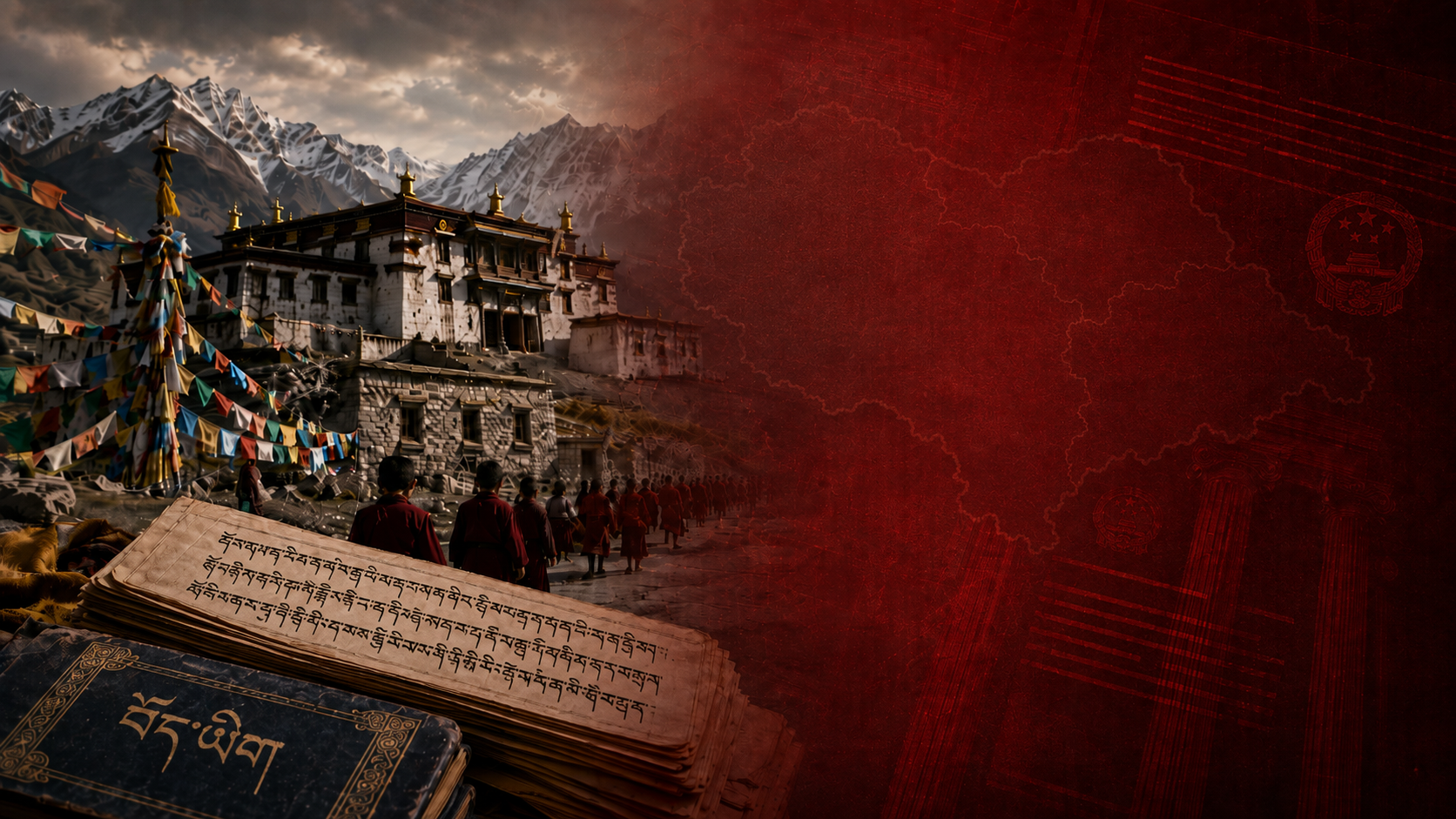
Nobody signs a treaty to end a civilization. It happens more quietly than that: a language taught less each year, a monastery’s novices replaced by state curricula, a demographic slowly resettled, an institution’s succession quietly rerouted through a ministry rather than a monastery. By the time the loss is visible, it is usually irreversible. This is the warning Tibet offers every minority culture watching from the outside: assimilation rarely announces itself as assimilation. It arrives dressed as modernization, unity, or progress, and by the time its true name is spoken, there is very little left to defend.
In Fairness to the Other Side of This Argument
Any honest accounting of this dispute has to hold two things at once. Beijing’s position, that Tibet’s governance is an internal matter, that its infrastructure and development spending have measurably raised incomes and connectivity on the plateau, and that no foreign government would tolerate a separatist movement organizing against its territorial integrity, is a real argument, made by a real state, and it should be represented rather than caricatured. Reasonable people can also disagree about how much weight international bodies should give to sovereignty versus self-determination, and about how much of the criticism of China’s Tibet policy is offered in good faith versus as a convenient stick in broader great-power competition with Beijing. This essay does not pretend to adjudicate that debate with false neutrality. It takes a side. But the side it takes should be able to withstand, not avoid, the strongest version of the other one.
The Question Tibet Puts to the Rest of Us
The Dalai Lama’s genius was never political leverage; it was moral translation. He took a border dispute and turned it into a global argument about compassion, dignity, and the right of a people to remain themselves. That argument does not expire when he does. But institutions and international norms, not one man’s biography, are what will actually determine whether Tibetan civilization survives into the century now unfolding.
So on his 91st birthday, the question is not really about Tibet at all. It is about us. When a small civilization stands before a powerful state, does the rest of the world see a geopolitical calculation to be managed, or a shared human responsibility to be honoured? History will remember which answer we gave. Tibet already knows which one it is still waiting for.


Leave a Reply