
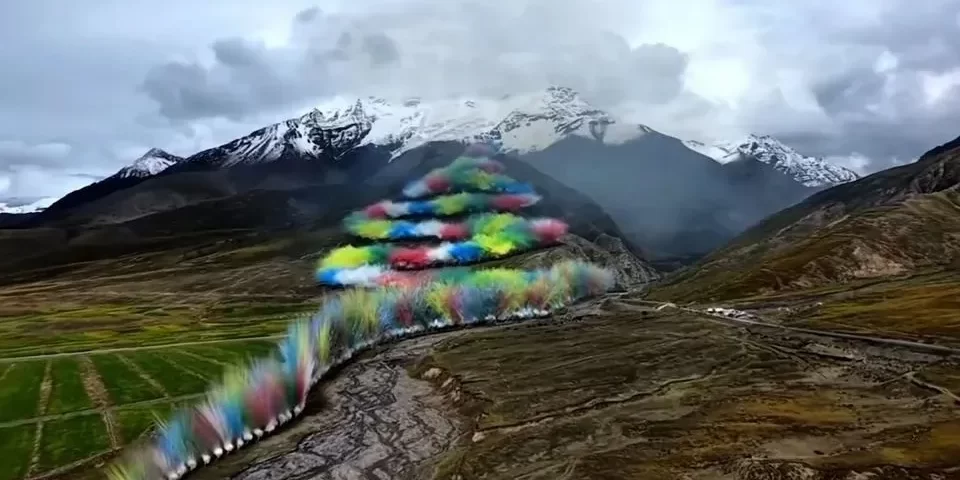
Chinese artist Cai Guo-Qiang and Canadian outdoor brand Arc’teryx are facing renewed criticism after their Rising Dragon fireworks performance in Tibet left toxic debris scattered across a mountain ridge in Gyangze County, Shigatse.
The September 20 show, staged on a high-altitude ridge in Relong Township, blasted thousands of charges into the shape of a dragon. Organisers had promoted it as “eco-friendly” and pledged professional cleanup, but new photos show local Tibetans gathering piles of debris days later.
A tourist who attempted to film the site said staff blocked access but described “a mountain full of holes caused by the explosions.” The visitor confirmed that villagers had been working for days to remove waste but had yet to finish.
Both Cai and Arc’teryx apologised on Chinese social media over the weekend, admitting “oversights” and promising cooperation with independent environmental assessments. Arc’teryx said the performance conflicted with its sustainability values, while Cai’s studio pledged “restorative measures.”
Critics, however, say the burden has fallen on Tibetans themselves. Writer Tsering Woeser asked online: “Didn’t Cai Guoqiang promise to make every effort to take remedial measures? Yet now, all these consequences have fallen upon the local people and the countless plants and animals across the mountains.”
Environmental experts warn that the plateau’s fragile ecosystem is particularly vulnerable to fireworks debris, chemical residues, and noise pollution. Thin soils, slow-growing vegetation, and high-altitude conditions mean even so-called biodegradable materials may not degrade for years.
The backlash has been especially sharp against Arc’teryx, long associated with conservation and outdoor culture, with observers accusing the Canadian-founded brand of hypocrisy. Cai, too, has been criticised for treating Tibet as a backdrop for spectacle rather than a landscape requiring protection.
Analysts say the incident fits a broader pattern of Chinese exploitation of Tibet’s environment, from mining and damming rivers to mass tourism projects. For many Tibetans, Rising Dragon is not just an art performance gone wrong—it is a stark reminder that they are left to bear the ecological and human costs of decisions made far from their land.



Leave a Reply