
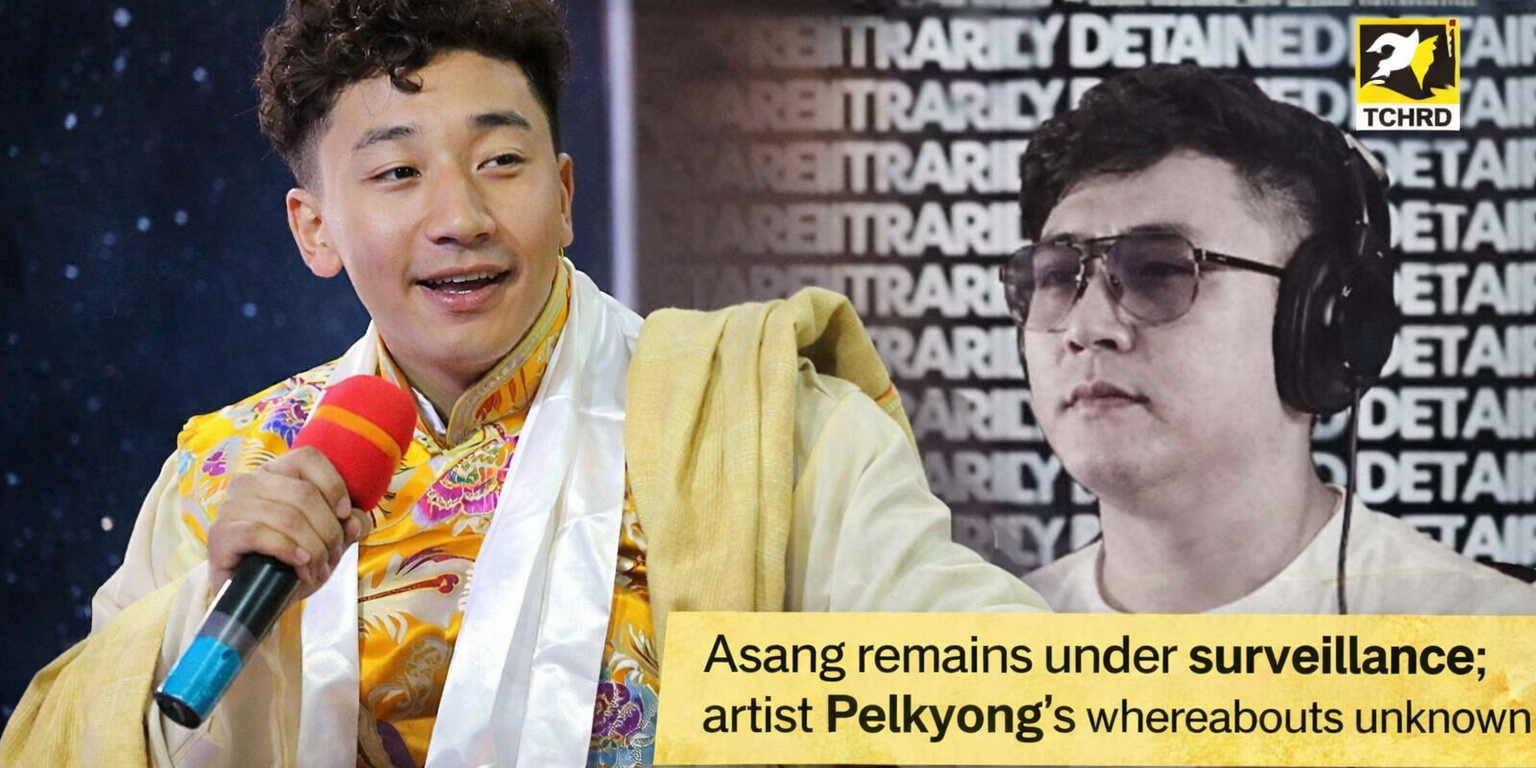
Tibetan artist Tsukte, popularly known as Asang, was released on 25 January 2026 after spending nearly six months in detention in Ngaba (Ch: Aba) County, Sichuan Province. Although freed from custody, he remains under strict restrictions that reportedly continue to curtail his fundamental freedoms, including his right to expression, movement, and association.
No information has been made available regarding the status or whereabouts of fellow Tibetan artist Pelkyong, who was detained alongside Asang in July 2025.
Post-Release Message Under Constraints
A day after his release, Asang appeared in a short video on a newly created account on the Chinese video-sharing platform Kuaishou. In the clip, he expressed gratitude to his supporters and announced the upcoming release of his second album titled རྨི་ལམ་གྱི་ཁ་སྟབས (“Power of Dreams”).
However, he stated that he was unable to speak about the circumstances surrounding his detention. He apologized to his parents for the suffering they endured during his imprisonment and thanked his wife, Lhamo, for the hardships she faced in his absence.
Asang’s previous Kuaishou account had been disabled following his arrest in July 2025.
According to information received by the Tibetan Centre for Human Rights and Democracy (TCHRD), Asang and his family continue to live under heavy surveillance. He is reportedly prohibited from discussing his detention or sharing related content on social media platforms.
Arrest Following Musical Release
Asang and Pelkyong were detained on 8 July 2025 from Adue Village in Ngaba County shortly after publicly releasing a cover of the song “Prince of Peace” on Kuaishou. The song, originally performed in 2006 by Tibetan singer Sherten with lyrics by Arig Chöten Thar, is widely recognized among Tibetans for its reverential message about 14th Dalai Lama.
The cover quickly gained public attention before being removed from the platform. Shortly thereafter, the two artists were taken into custody by Chinese authorities.
In Tibet today, even symbolic or artistic expressions perceived as reverent toward the Dalai Lama can result in severe punishment. Authorities have criminalized such expressions, framing them as political offenses.
Pattern of Criminalizing Cultural Expression
Ngaba County has long been one of the most heavily monitored areas in Tibet, particularly following waves of protest and self-immolation over the past decade. The detention of artists for their music reflects a broader pattern of criminalizing cultural expression tied to Tibetan identity.
Asang, a father of two, hails from the Naktsang family of Camp No. 4 in Kashul Village, Barma Township, Ngaba County. He is widely admired for songs promoting Tibetan language, culture, and spiritual values. He is also a student of Gebey, a well-known Tibetan dhunglen artist who himself has faced repeated detentions for his music.
In 2015, nine Tibetans from Ngaba County were sentenced to prison terms ranging from six to fourteen years for celebrating the Dalai Lama’s 80th birthday. Among them, monk Dukdra received 14 years for organizing a public picnic, while monk Lobsang Khedup was sentenced to 13 years for creating a WeChat prayer group. Six of the nine had previously served prison terms for political charges.
Ongoing Concerns
TCHRD has called on Chinese authorities to lift all restrictions imposed on Asang and his family, noting that although he has been released, continued surveillance and prohibitions effectively deny him his fundamental rights.
The organization further urged authorities to immediately disclose the whereabouts of Pelkyong, end his incommunicado detention, and ensure his safety in accordance with international human rights standards.
Asang’s release may have brought visible relief to his supporters, but the silence surrounding his detention — and the ongoing restrictions imposed upon him — underscore the fragile space available for Tibetan artists seeking to preserve their cultural voice.


Leave a Reply