
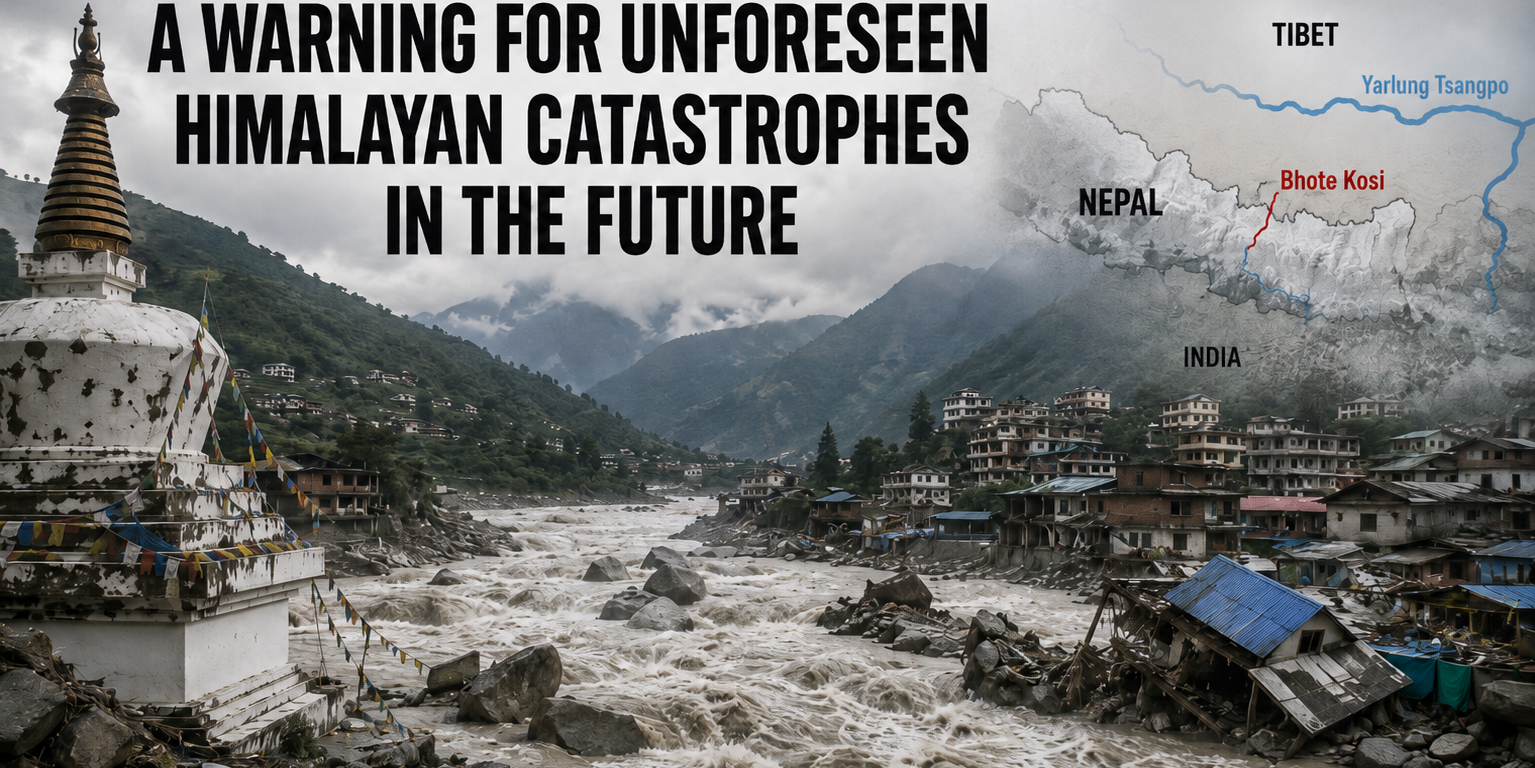
The catastrophic flash flood in the Bhote Kosi river (called Poique in Tibet) at the Tibet-Nepal borders at the Kyirong, also called Gyirong area of Tibet, causing death of hundreds in the Rasuwa and Nuwakot districts of Nepal calls for an in-depth analysis by the international community. With more than 250 people dead, and hundreds of pilgrims and tourists from different countries like India, USA, UK, Australia, along with many Nepalese citizens missing, this calamity has deeper implications. More than 200 Indians are reported missing in this flood which include a group of Kailash- Mansarovar pilgrims who were returning from their pilgrimage. This speaks about the ticking ecological resilience of the Himalayas facing years of unsustainable and hazardous developments and exploitation under the illegal communist regime of People’s Republic of China in Tibet for seven decades now.
Mother Nature has sent a warning call to the Himalayan Nations, while posing a question for all mountain lovers, those who adore and worship the Himalayas, the adventure lovers whose ultimate dream is to scale the heights of the great Himalayas, on their silence towards the open desecration of Himalayan rivers, glaciers, grasslands, forests, and inhuman exploitation of Himalayan cultures like Tibet by communist China for all these years. It also questions the integrity and the truthfulness of the global climate justice movement which fails to stop China from exploiting the fragile Himalayan ecosystem, draining, and damming of transboundary Himalayan rivers, and converting the high mountainous grasslands and meadows of Tibet for urbanization, and modern developments. Why does the world remain quite on the ecological devastation of the Himalayas by communist China? Why no one can stop China from terrorizing the natural environment of Tibet which is having far reaching impacts on millions of people and the natural environment of Asian countries like Vietnam, Laos, Cambodia, Nepal, India, Bangladesh, etc. The current situation in Nepal is not a stand-alone incidence; the Himalayan environment is transforming due to the Chinese occupation of the Tibetan plateau. The reason behind the flash floods of Nepal is the exploitation of the Tibetan plateau by the Chinese government over a long period of time, it cannot be simply attributed to climate change driven glacier burst. The Tibetan glaciers are melting faster, the permafrost in the Tibetan plateau also called the third pole is thawing due to unsustainable exploitation of the Tibetan plateau by Chinese government. The communist People’s Republic of China is the biggest contributor to green-house gases build up in Earth’s atmosphere, reports say China emits double the amount of CO2 when compared to United States of America.
The communist Chinese government is the greatest environmental challenge for the world, especially for the Asian countries and the Himalayan Nations, whose water security, ecological well-being, and political sovereignty is threatened by its expansionist and exploitative communist mandate. The world must know that the solution to this predicament is not dialogue, legislations, and negotiation, or protests and conferences for climate justice, but a unite global front for abolishing of the Chinese iron grip from the Tibetan plateau. The cause of Tibetan freedom movement is a global environment movement, because the preservation of the Himalayas is integrally connected with political freedom of Tibet and rights of the Tibetan people in their motherland. The independence of Tibet will restore the peaceful buffer for the Himalayan Nations, by reinstating the snow dragon in its Tibetan kingdom. The communist regime has already extracted huge economic benefits by exploiting the resources of the Himalayas, be it the rare earth or the Himalayan rivers; and have inflicted irreparable damage to Tibetan ecology. We must call it over now, or else it will be too late, the Chinese mega dam at the bend of Yarlung Tsangpo, the concerns of environmentalists regarding transfer of river water from Yarlung Tsangpo to Chinese mainland, and the possible seismic catastrophe in the holy Pemako land at Arunachal Pradesh – Tibet border are the palpable future threats to the Himalayas.
Soumyadeep Datta, prominent Indian environment activist, eminent writer and Convener of Free Tibet- A Voice from Assam, spoke about the environment concerns related to the Chinese occupation of Tibet, he said “It is very difficult to pinpoint the environment problems of Tibet due to lack of information and reliable scientific data from the Tibetan plateau. The Chinese regime refuses to share data on the loss of forests, wildlife, change of land use pattern, conversion of grasslands, rampant mining, dumping of radioactive wastes, and damming of the Tibetan rivers, etc. There is no transparency whatsoever, and whatever data is been made available, is not reliable and is insufficient to gauge the extent of exploitation and destruction of natural environment during the 7 decades of Chinese rule in Tibet. We all know that Tibetan ecology is devastated but we do not have the requisite scientific data to get a conclusive picture. It is time we demand Chinese communist party to release information on the forest cover, flora, fauna, rivers, glaciers, and land use pattern inside Tibet. All environmentalists, conservationists, ought to raise their voice against the exploitation of Himalayan rivers in Tibet by communist China.” Free Tibet – a Voice from Assam is a people’s forum in Assam that is working to raise a civil society movement among Indians in support of the peaceful Tibetan freedom movement; the forum is also leading a river conservation campaign titled ‘Save Tsangpo – Siang -Brahmaputra’, raising concerns regarding the imminent devastating impacts of the Chinese mega dam at the bend of Yarlung Tsangpo in the Medog country, which is very close to the international border of Tibet and India in Upper Siang district of Arunachal Pradesh.
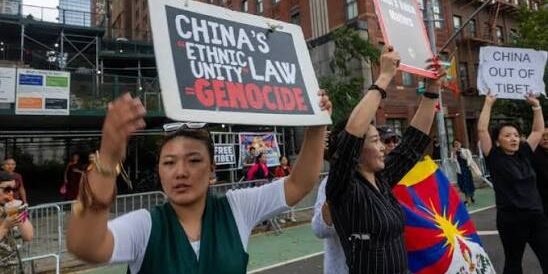
The global silence on these issues is of grave concern for the Himalayan cultures, and the biodiversity rich Himalayan ecosystems. The collective silence and inaction expressed from the free world towards the Tibetan movement, and even towards the sacrifices of Tibetan freedom fighters, and martyrs like Pawo Lobga Rangzen who laid down his life in self-immolation sacrifice in front of UN Headquarters at New York on 2nd July 2026, after a lifetime of activism raising voice for freedom of Tibet, and rights of the Tibetans, mocks the conscience of the world community. The integrity and commitment of the free world to democracy, and human rights is been questioned by these Tibetan martyrs who embrace death while adhering to the values of the non-violent and peaceful Tibetan freedom movement, where no harm is caused to the oppressors, no Chinese have died due to violence of Tibetans. The silence of the Buddhist Nations, and the world regarding the continued Chinese violence inflicted upon Tibetan culture, religion and the ongoing demolition of important Tibetan Buddhist sites like Larung Gar, the world-famous community of Buddhist monks, and Buddhist nuns in the Sertar Country, Garze within the Amdo province of Tibet is not helpful for the world. This silence is counter-productive, sometimes this silence may boomerang, as it happened in Nepal.
Sikyong Penpa Tsering, the democratically elected Executive of Central Tibetan Administration based at Dharamshala, India, shared a strong message for the world during the special prayer service on 20th August 2026, at Dharamshala marking the 49th day since the passing of Tibetan self-immolator Lobga Rangzen, he said, “The 49th day following a person’s passing is considered an important day in Tibetan Buddhism. Over the past seven weeks, Tibetans around the world have undertaken various forms of activism to draw international attention to the issue. In recognition of this, the 17th Kashag and the 18th Tibetan Parliament in Exile organized today’s memorial prayer service to honour Lobga Rangzen and all other Tibetans who have self-immolated for the Tibetan cause. These individuals did not seek to harm others or promote violence, but made the ultimate sacrifice in hope of drawing greater attention to the Tibetan cause. He further said that China is seeking to extend its influence across the world through initiatives such as the Global Governance System, Global Security Initiative, and Global Cultural Initiatives, presenting these as mechanisms to shape the international order. He cautioned, if China’s growing influence and control continue to expand globally, the free world may gradually become accustomed to accepting its influence, raising serious questions about the future of freedom and democratic values. He urged the world to recognize that these developments are not only about Tibet, but also have implications for other people and regions.”
This special prayer service which was followed by a march and a series of events organized by the Kashag, and led by Sikyong Penpa Tsering in honour of Tibetan self-immolator Lobga Rangzen, and all other Tibetan martyrs is a remarkable milestone in the Tibetan freedom movement. It signifies the solidarity of the Tibetans, from across the world towards the cause of Tibetan freedom movement, and depicts the inherent strength and resilience of the Tibetan cause, which will lead to preservation of Tibetan culture, religion, language, and the Tibetan identity despite the atrocities and repressive policies of the Chinese government. However, the question looms large over the integrity, and conscience of the free world on their sense of commitment in upholding the rights of the Tibetan people, the rights of the Asian people for their access to sustainable source of clean water, their rights to protect biodiversity, ecology, wildlife, and livelihood in the Himalayan environment which is integrally connected with the Tibetan plateau. Let the flash flood of Nepal, and tragic death of hundreds in this catastrophe not die in silence, let it shake the world to realize our meekness and bring about a global intervention of this devastation of the Himalayas, by abolishing the Chinese dragon from the roof of the world forever.
Disclosure: This article is published as a guest opinion. The views and interpretations expressed are those of the author and do not necessarily reflect the editorial position of Tibetan Journal.


Leave a Reply