
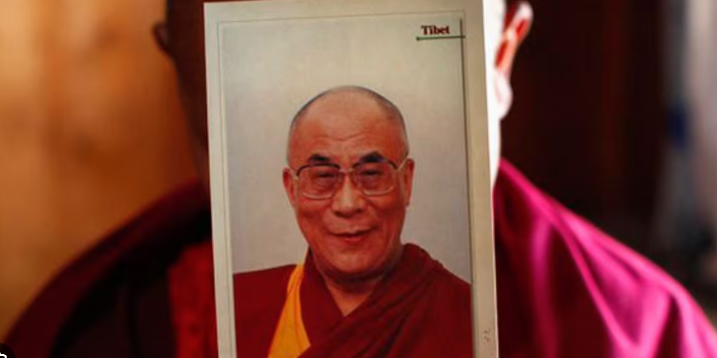
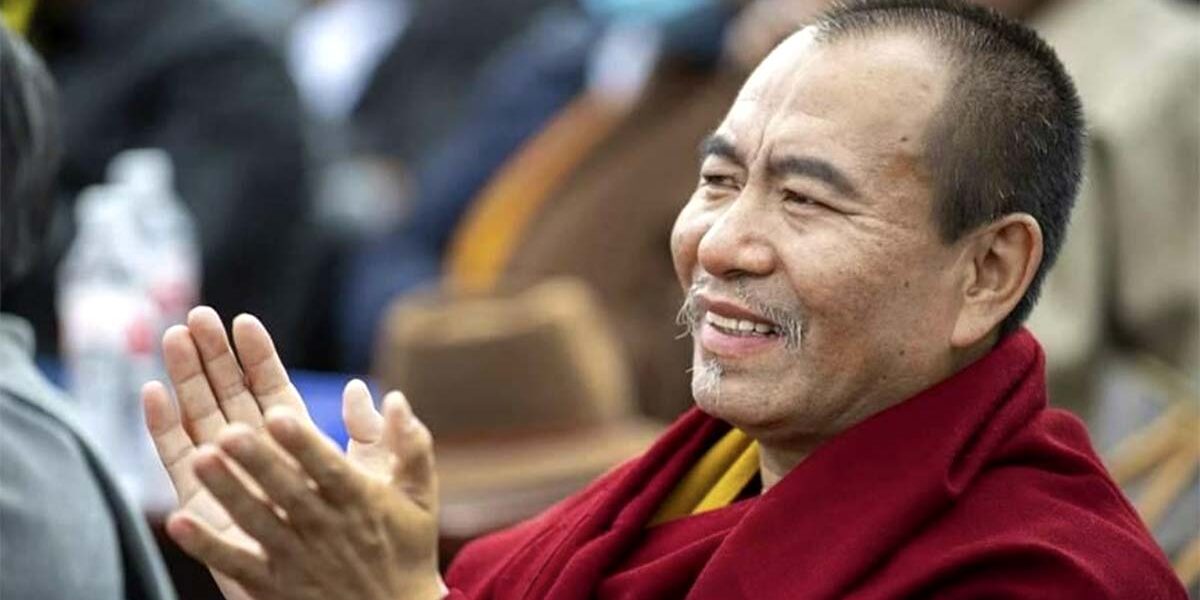
A veteran Chinese pro-democracy activist and former leader of the 1989 Tiananmen-era student movement has reportedly been placed under criminal detention in Tibet after showing a photograph of His Holiness the Dalai Lama on his mobile phone during a visit to Sera Monastery in Lhasa.
Zhang Yi, a Wuhan-based human rights activist, was detained by police on July 1 while visiting the Tibetan capital with his younger brother, Zhang Xuan, according to Weiquanwang, a Chinese-language human rights information network.
The reported circumstances surrounding his detention have raised concerns over the severity of political and religious restrictions in Tibet, where images of the Dalai Lama and expressions of loyalty to the exiled Tibetan spiritual leader remain highly sensitive under Chinese rule.
According to Weiquanwang, Zhang and his brother were visiting Sera Monastery, one of the three major Gelug monasteries in the Lhasa area, when Zhang encountered a language barrier while attempting to borrow a mat used by devotees.
During the interaction, Zhang reportedly showed a Tibetan monk or devotee a photograph of the Dalai Lama stored on his mobile phone. According to the account provided by his family, no further conversation or exchange took place.
At approximately 5:30 p.m., police at the monastery detained both brothers and transferred them to a police facility under the Lhasa Public Security Bureau.
Zhang Xuan was released after giving a statement. Authorities reportedly provided no formal legal documentation concerning his brother at the time, but a state security officer verbally told him that Zhang Yi would be held for 15 days.
The case, however, subsequently escalated.
On July 18—17 days after the brothers were detained—Zhang Xuan reportedly received a telephone call from officials with Tibet’s state security authorities informing him that Zhang Yi had been placed under criminal detention and that his case involved alleged “incitement.”
Officials reportedly instructed the family to transfer money for Zhang’s living expenses in detention and said formal written notification would later be mailed to the family’s home in Wuhan.
Authorities have not publicly disclosed the specific criminal charge against Zhang, the precise legal provision under which he is being investigated, or, according to the initial reports, where he is being held.
The account of Zhang’s detention was first reported by Weiquanwang and has also been reported by the Chinese rights-monitoring organization Civil Rights and Livelihood Watch. The latter similarly reported that Zhang was detained after displaying a photograph of the Dalai Lama at Sera Monastery and that his brother was later told the case involved “incitement.”
Detention Coincides With New Ethnic Unity Law
The timing of Zhang’s detention has added another layer of concern.
He was taken into custody on July 1, the same day China’s new Law on Promoting Ethnic Unity and Progress came into effect nationwide.
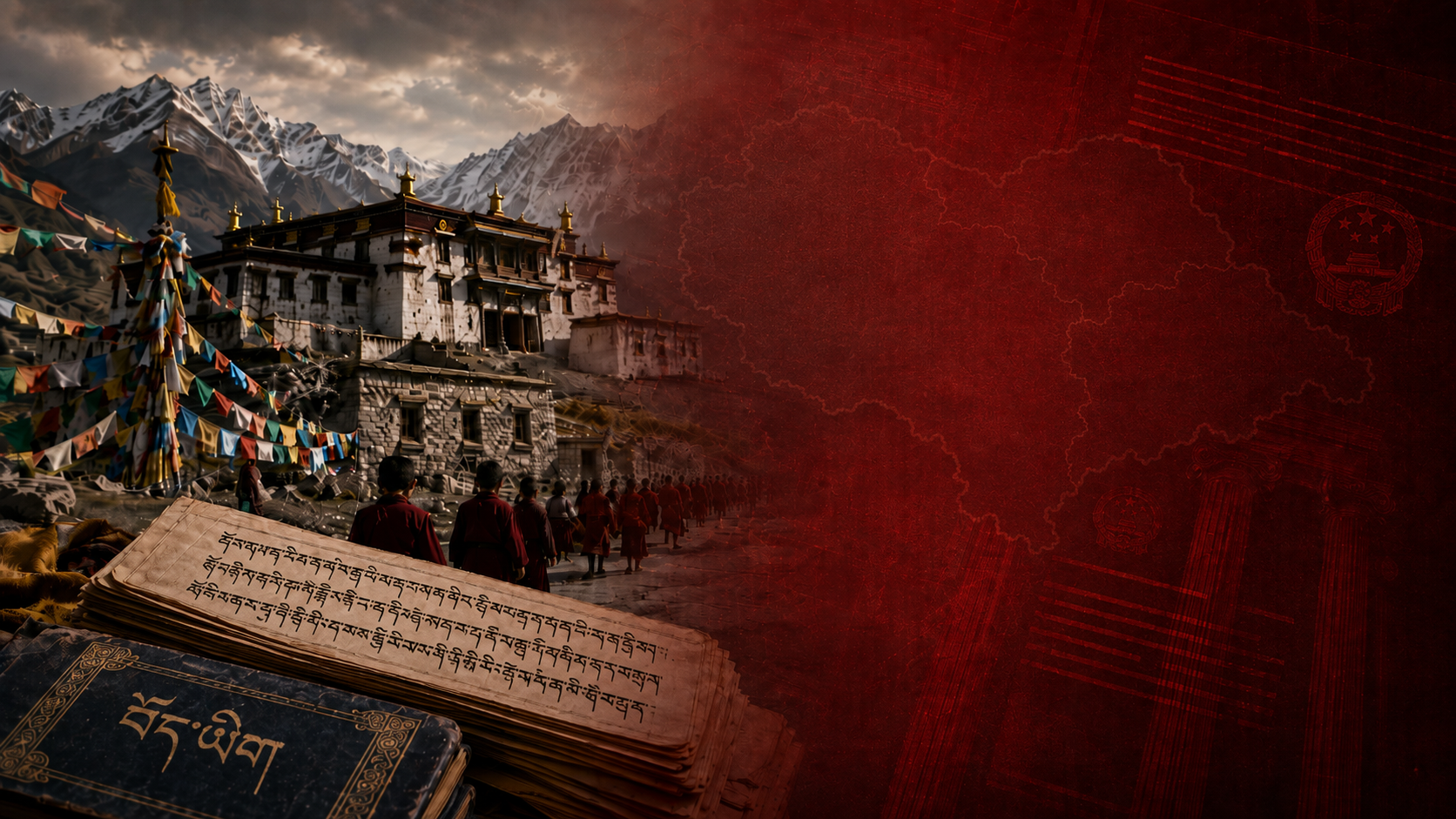
Passed by China’s National People’s Congress in March, the law codifies the Chinese government’s drive to strengthen a common Chinese national identity among the country’s ethnic groups. It promotes the use of standard spoken and written Chinese, patriotic education, ethnic integration and the further “Sinicization” of religion.
Chinese authorities say the legislation is intended to promote ethnic unity, development and social cohesion.
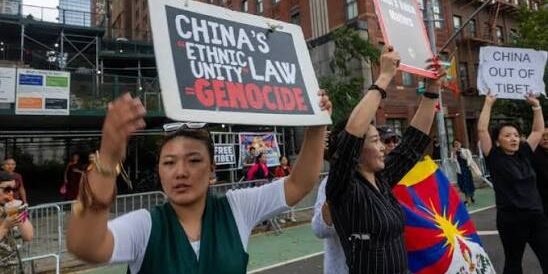
Human rights groups and critics, however, have warned that the law could further institutionalize assimilationist policies affecting Tibetans, Uyghurs, Mongolians and other ethnic groups. Critics have raised particular concerns about its implications for minority languages, religious practice, education and expressions of distinct ethnic identity.
The law also contains provisions targeting activities authorities consider harmful to ethnic unity or national unity.
Zhang’s family reportedly fears that the timing of his detention may be significant and that he could become an early target of the more restrictive political environment surrounding implementation of the law.
There is currently no public evidence, however, establishing that Zhang has formally been charged under the new legislation. Authorities have not disclosed the precise legal basis for his detention.
His case nevertheless highlights longstanding concerns over the breadth with which politically sensitive expression can be treated in Tibet—particularly when it involves the Dalai Lama.
Dalai Lama Images Remain Highly Sensitive in Tibet
The Dalai Lama fled Tibet in 1959 following the Tibetan uprising against Chinese rule and has lived in exile in India ever since.
Beijing accuses the Tibetan spiritual leader of separatism, allegations he has repeatedly rejected. The Dalai Lama has for decades advocated what is known as the Middle Way Approach, seeking genuine autonomy for Tibetans within the framework of the People’s Republic of China rather than independence.
Despite his continued religious significance to millions of Tibetans, public expressions of devotion to the Dalai Lama remain subject to extensive restrictions inside Tibet.
His photographs have long been treated as politically sensitive by Chinese authorities, particularly in monasteries, government institutions and other closely monitored public spaces.
Chinese authorities have also intensified efforts in recent years to ensure that Tibetan Buddhism conforms to Communist Party political requirements, a policy officially described as the “Sinicization” of religion.
The reported detention of a Chinese activist over an apparently brief display of the Dalai Lama’s photograph at one of Tibet’s most important monasteries could therefore draw renewed attention to the extent of restrictions surrounding Tibetan religious expression.
A Veteran of China’s 1989 Democracy Movement
Zhang Yi’s case is also notable because of his long history of political activism in China.
According to Chinese human rights sources, Zhang was a law student at Wuhan University during the nationwide pro-democracy demonstrations of 1989 and became one of the prominent organizers of the student movement in Wuhan.
Following the Chinese government’s military crackdown on the Tiananmen movement, Zhang was convicted of “gathering a crowd to disrupt traffic order” and sentenced to two years in prison.
Rights sources say he suffered torture while imprisoned, resulting in permanent hearing loss in one ear.
After his release, Zhang continued advocating for democratic reform and civil liberties despite years of government surveillance and pressure. He has also publicly commemorated the June 4, 1989, Tiananmen crackdown for more than two decades.
His political history raises questions about whether authorities viewed the incident at Sera Monastery in isolation or in the context of his longstanding record of activism.
According to rights reports, Zhang had already encountered restrictions before reaching Tibet. In late June, he reportedly sought to travel in Tibet and Xinjiang but experienced difficulties obtaining documentation required to enter certain restricted border areas.
Family Awaits Answers
More than the unusual circumstances of the initial detention, it is the apparent escalation of Zhang’s case that has heightened concern.
What his brother was initially told would be a 15-day detention reportedly became criminal detention without the family being given a clear public explanation of the charge.
The word reportedly communicated to his brother—“incitement”—also leaves significant questions unanswered: incitement to what, based on what conduct, and under which provision of Chinese law?
If the account provided by Zhang’s family is accurate, the known act preceding his detention was remarkably limited: displaying an image of the Dalai Lama on a mobile phone during a brief interaction at a Tibetan Buddhist monastery.
As of publication, Chinese authorities have not publicly explained how that alleged conduct could constitute a criminal offense involving “incitement.”
Zhang Yi’s precise legal status, access to a lawyer and the full allegations against him remain unclear.
His detention comes as Chinese authorities intensify calls for political stability, ethnic unity and the alignment of Tibetan Buddhism with Communist Party objectives in Tibet. The case is likely to add to concerns among rights advocates that even seemingly minor expressions involving the Dalai Lama can carry serious consequences in one of China’s most tightly controlled regions.



Leave a Reply